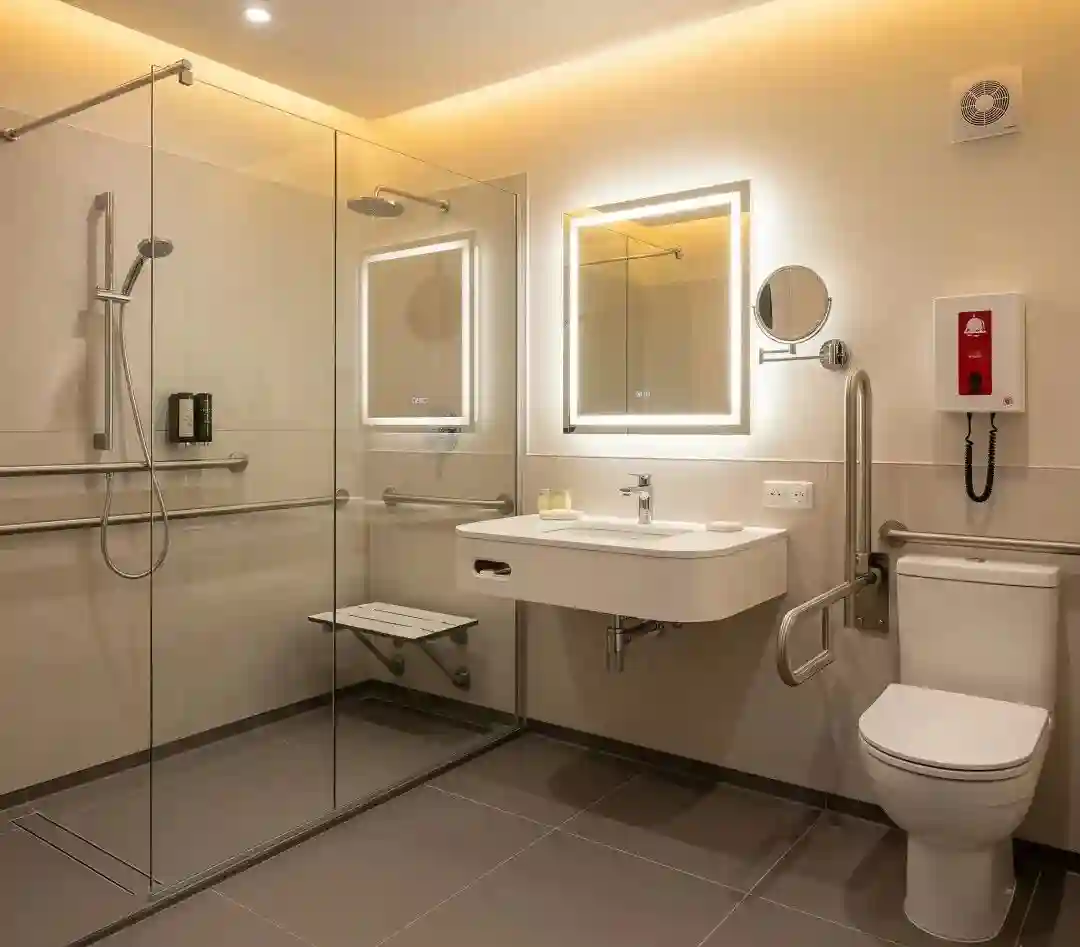
Senior Bathroom Grab Bars(2025 Guide): Types, Placement, Sizing

Senior bathroom grab bars are one of the simplest changes that can dramatically reduce fall risk at home.
Yet most families don’t think about them until an accident happens.
In today’s guide, you’re going to learn exactly how to choose and place the right grab bars to make a bathroom safer for aging adults.
Let’s get into it.
Chapter 1:
Types of Grab Bars
For seniors, daily activities often center around the bathroom.
Almost every movement in this space requires the use of grab bars. Depending on different action needs and movement paths, the type of grab bar selected will also vary.
In general, they can be divided into the types shown below.
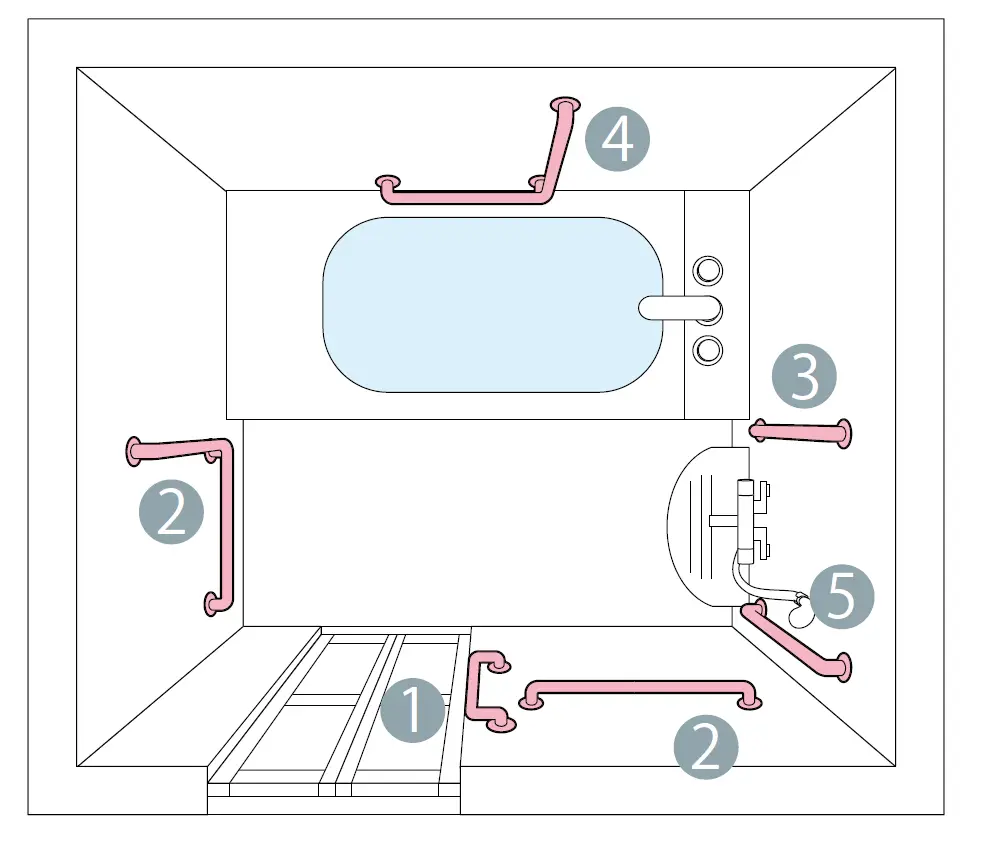
Based on this, I have summarized three of the most practical bathroom grab bars.
Vertical grab bars
These are mainly used to give seniors something to grip, help them stand up, turn around, or lean against.
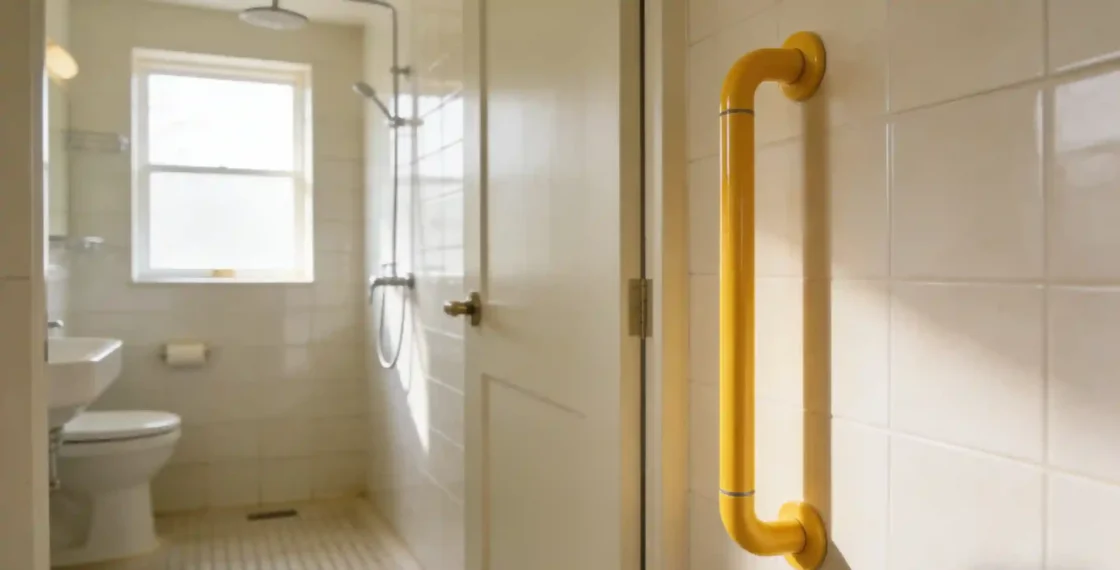
They are usually installed near the door, the toilet area, and the shower area.
Horizontal grab bars
These allow seniors to hold on and maintain balance while moving.
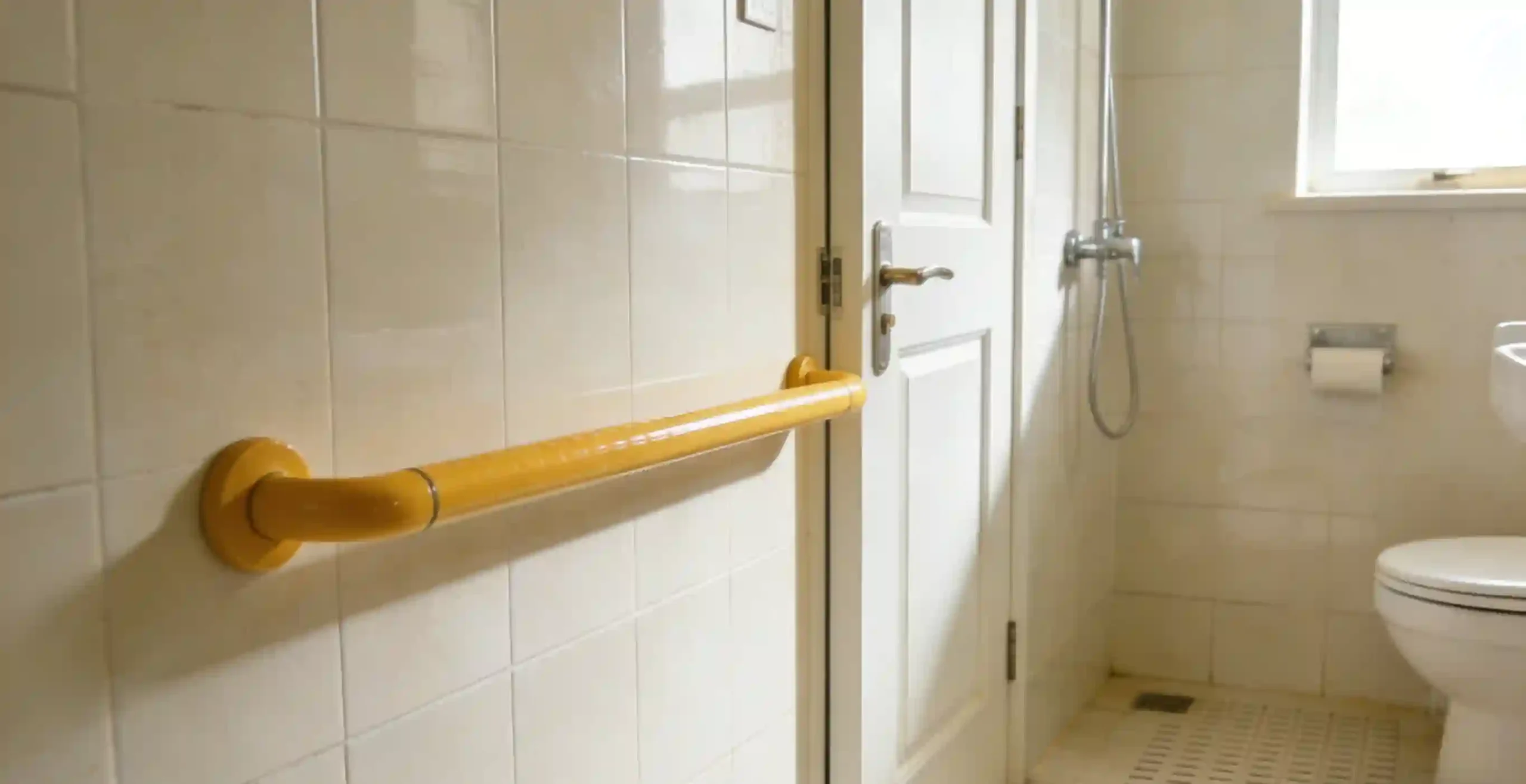
They are commonly installed in traffic areas such as corridors and elevators, or in areas where falls are more likely to occur (such as the shower area).
L-shaped grab bars
This is the type of grab bar usually installed in the bathing area.
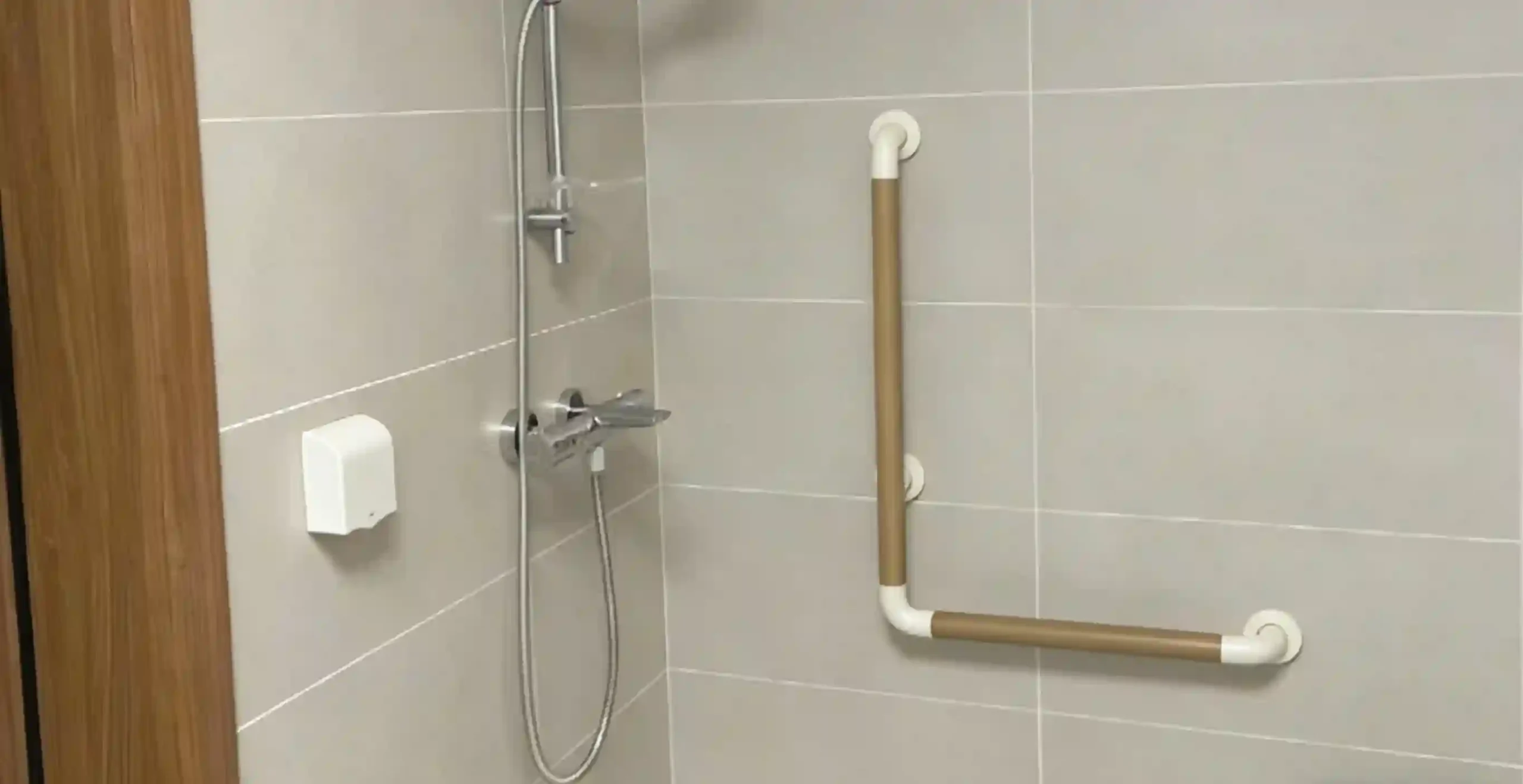
The vertical bar allows seniors to easily grip it while standing, increasing stability. The horizontal bar is more focused on the seated bathing position. It provides a support point that allows seniors to push themselves up even on slippery floors, effectively preventing falls.
There are also two “advanced” grab bars installed beside the toilet that combine aesthetics and storage functions.
Multi-functional grab bar with shelf and toilet paper holder
The horizontal bar provides support, and toilet paper can be placed beneath the bar. The flat surface of the bar is wide enough to hold personal items such as a phone or glasses, saving space and making it very convenient for seniors when using the toilet.
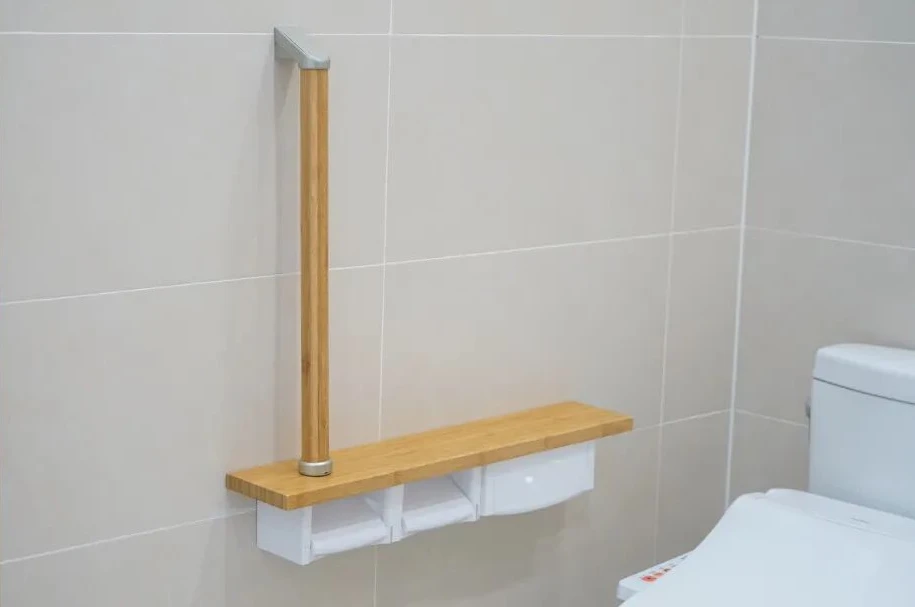
Some products are designed in an L-shape, with an additional vertical bar that allows seniors to easily use force when standing up or sitting down.
Flip-up grab bar
This is usually installed on the other side of the toilet.
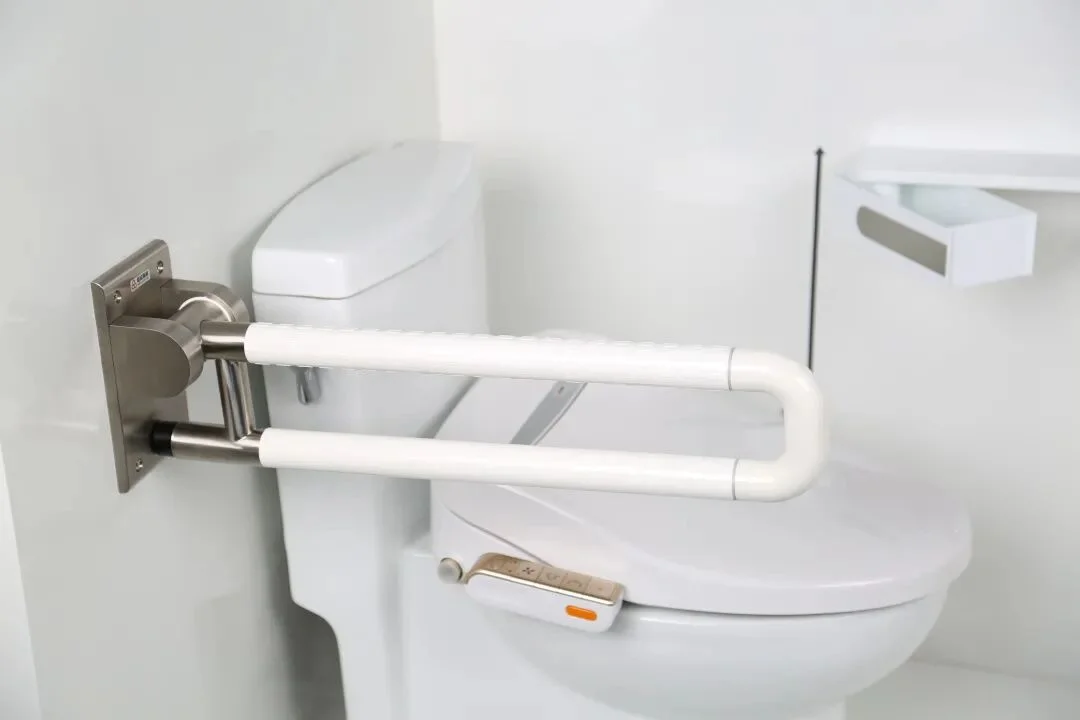
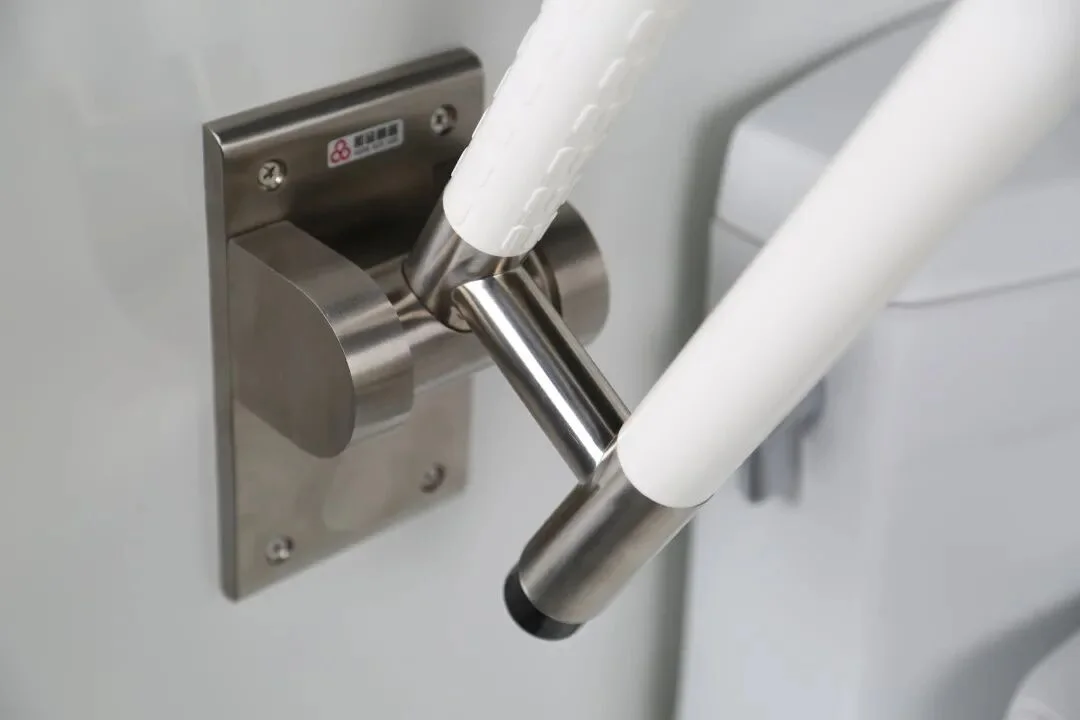
When folded up, it makes it easier to sit down from the side onto the toilet. When in use, seniors can rest their arms on it, and when standing up, they can use it for support, helping to prevent falls caused by numbness or weakness in the legs.
Chapter 2:
Placement & Sizing
After understanding the types of grab bars, the five types mentioned above are enough to cover 99% of home elderly care needs.
However, before formal installation, there is one universal key parameter that must be determined first:
Golden diameter: 32mm–35mm
- The bathroom environment often contains standing water and moisture. If the grab bar is too thick (>40mm), seniors will not be able to grip it firmly. If it is too thin (<30mm), it will be uncomfortable in the hand. A diameter of 32mm–35mm best matches the grip mechanics of the elderly hand and provides the greatest sense of security.
Next, we will start from the three most common daily scenarios for seniors to clarify the grab bar configuration and installation positions in different areas.
First, vertical grab bars for entry and exit
Entering the bathroom from the outside requires opening and closing the door, which can easily cause body instability and loss of balance. Installing a vertical grab bar can support the body and help maintain balance.
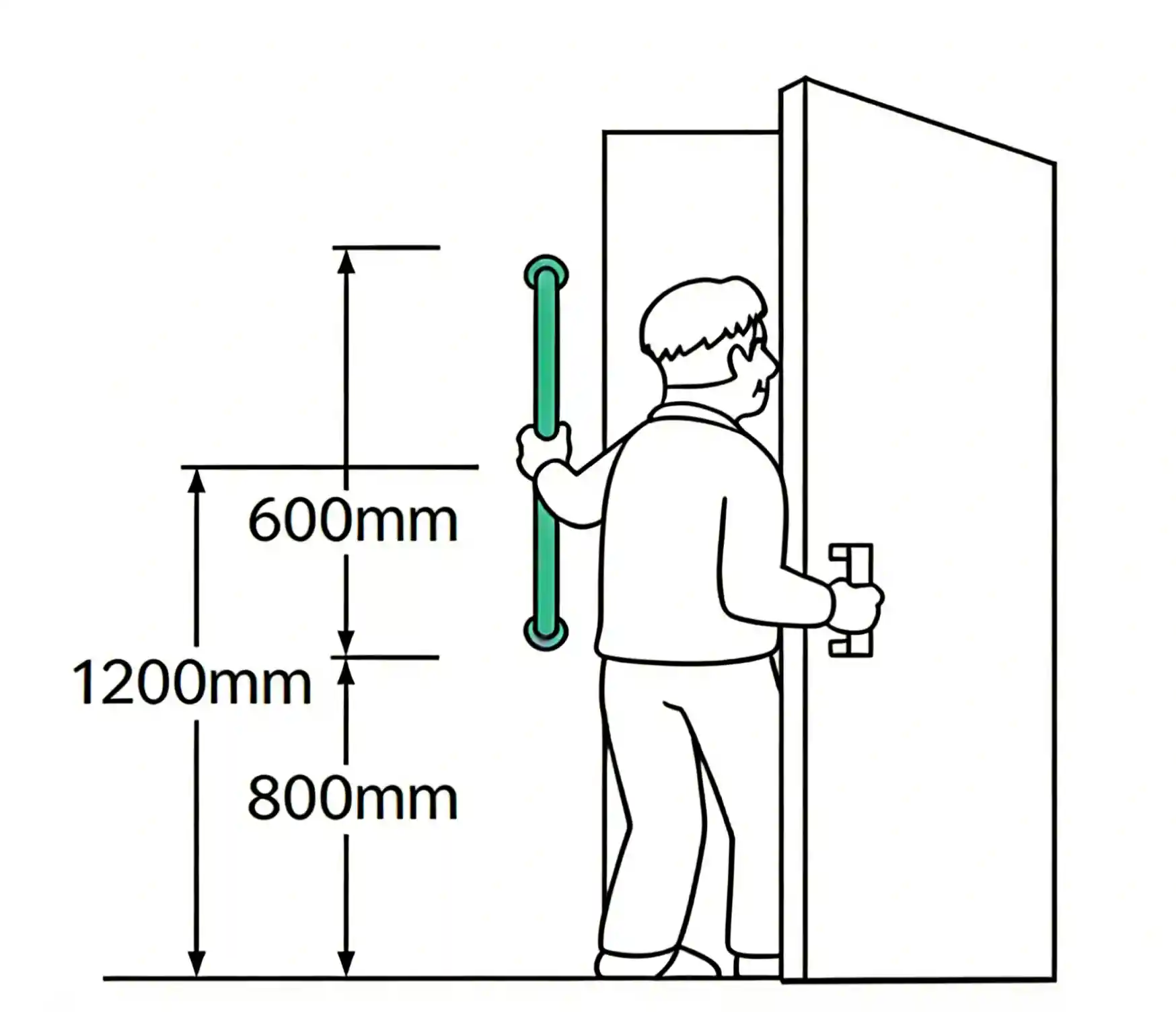
Second, horizontal grab bars for movement
There is an entrance and exit on the side of the toilet, and there is a certain distance from the toilet. A horizontal grab bar can be installed on the wall to facilitate safe movement within the bathroom.
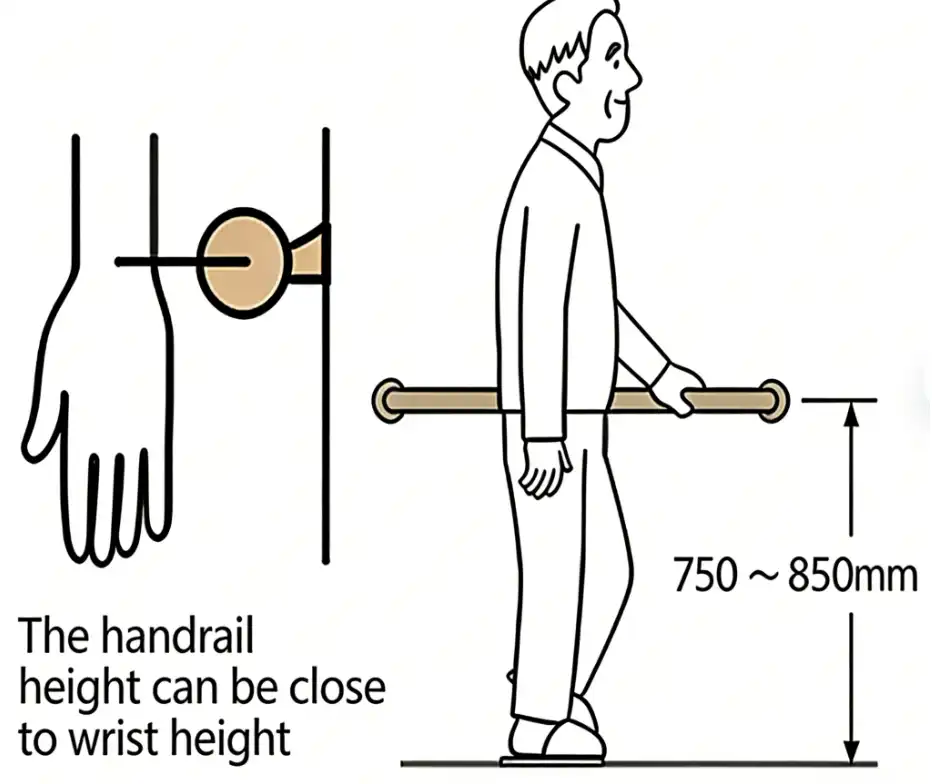
Third, grab bars for assisted standing, sitting, and position stability
Toilet area:
- Install an L-shaped grab bar or a flip-up grab bar (an integrated version with a toilet paper holder is even better). The horizontal bar helps stabilize the sitting position, while the vertical bar helps provide leverage when standing up.
Shower area:
- Install an L-shaped or vertical grab bar to prevent slipping and falling.
- After installing an L-shaped grab bar or an integrated grab bar with a toilet paper holder beside the toilet, a series of actions such as using the toilet will become much easier. In addition, a horizontal grab bar or support shelf can greatly improve sitting stability.
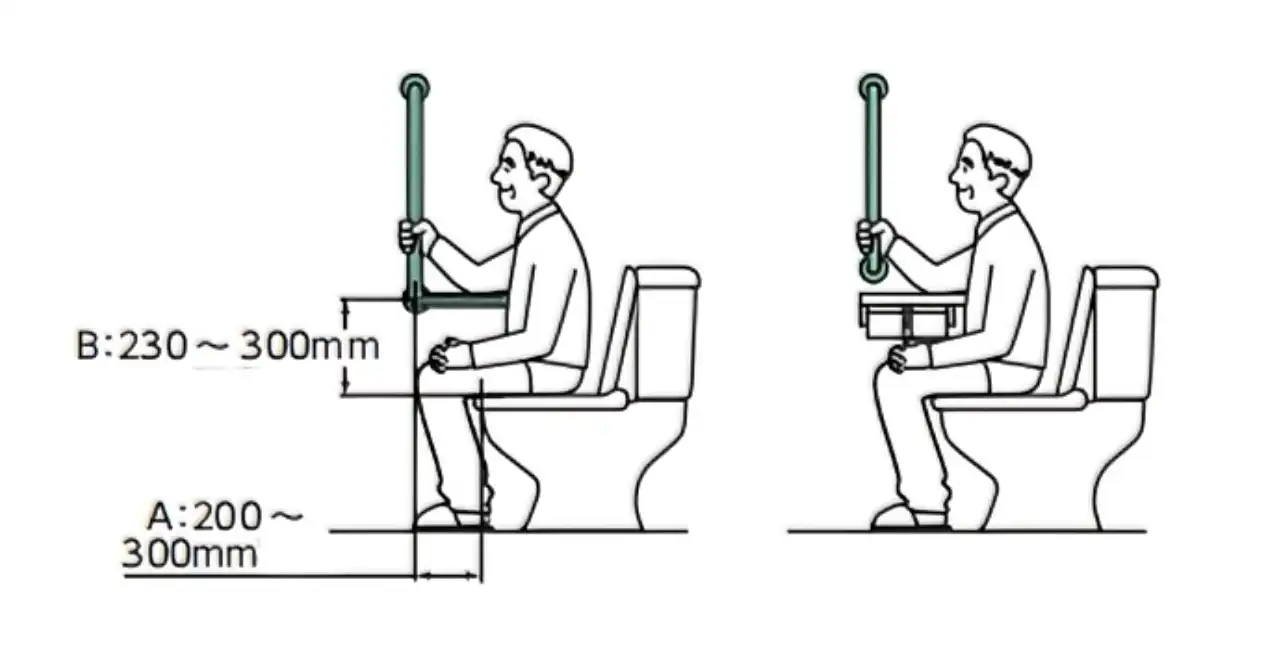
Appendix: Quick reference table for installation positions and dimensions
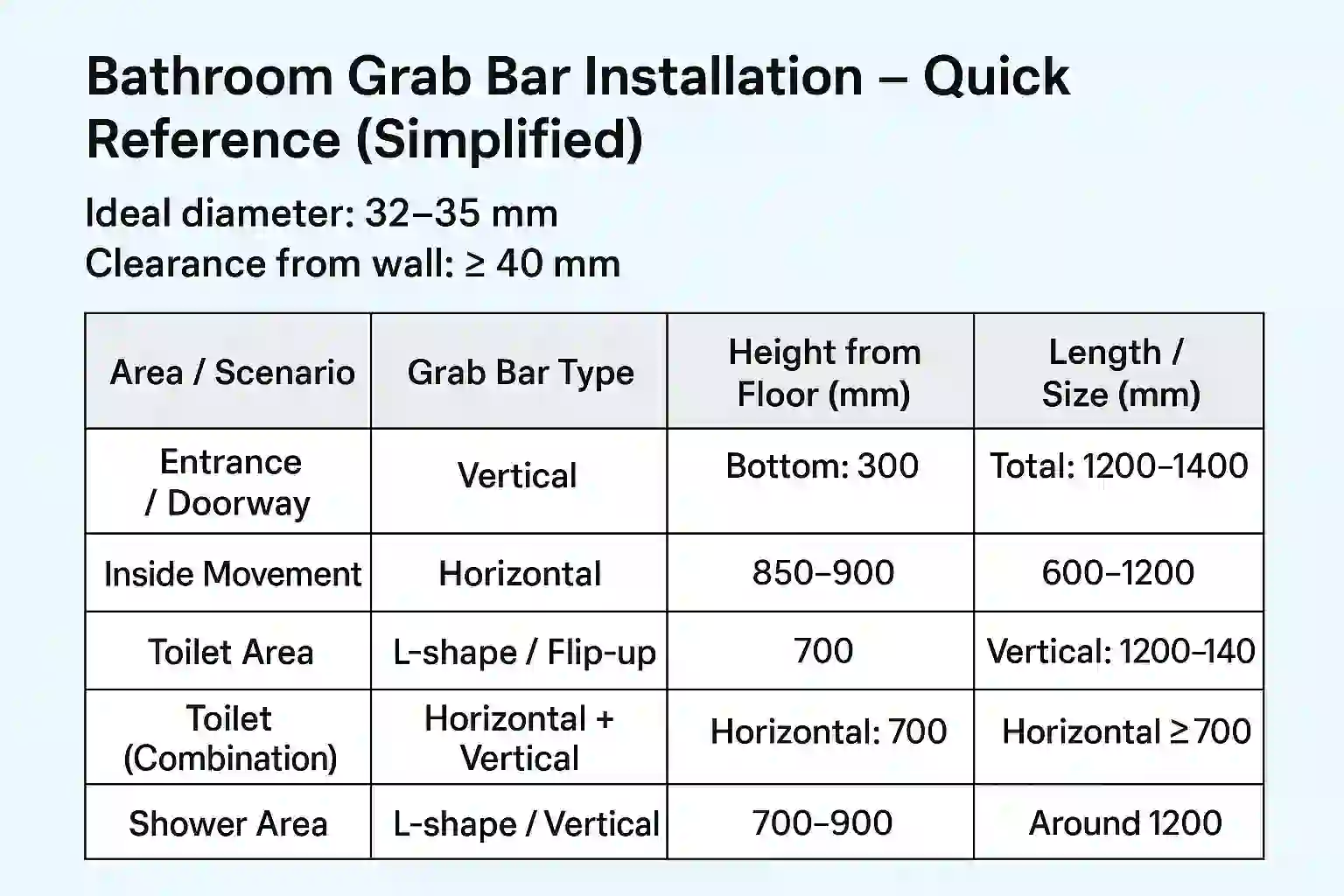
Toilet Area vs Toilet (Combination)
- Toilet Area means an integrated L-shaped or flip-up grab bar system.
- Toilet (Combination) means using a separate horizontal bar + a separate vertical bar instead of one single L-shaped bar.
Chapter 3:
Material Selection
The special humid environment of a bathroom places high demands on all materials used in it.
High strength and corrosion resistance make stainless steel the most common structural material, while aluminum alloy has greater advantages in terms of light weight and rust resistance.
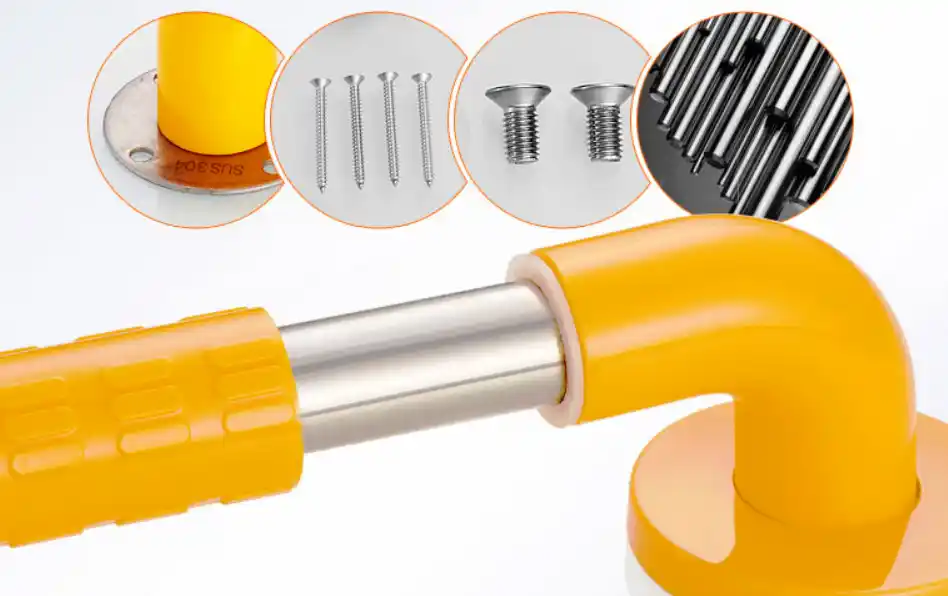
However, the outer surface determines the actual user experience. The materials used for the outer surface are the most common forms, including ABS, PP, and nylon.
Among them, ABS and nylon are usually superior to PP in terms of strength, aging resistance, and stability.
At the same time, they provide a constant-temperature touch and antibacterial properties, which can effectively avoid the discomfort of cold surfaces and the growth of bacteria.
If fine textures are added to the gripping area, along with plastic anti-slip particles or surface treatments such as baked matte coating, this not only improves slip resistance but also significantly enhances comfort.

The ideal overall material combination is:
inner layer of stainless steel tube / aluminum alloy + outer layer of ABS / nylon.
Chapter 4:
Final recommendations
① Bathroom entry and exit: Install a vertical grab bar beside the door
② Movement inside the bathroom: Install L-shaped and horizontal grab bars on the wall
③ Entering and exiting the bathtub: Install a vertical grab bar at the end of the bathtub
④ Sitting down and standing up in the bathtub: Install an L-shaped grab bar on the side wall of the bathtub
⑤ Sitting down and standing up in the shower: Install a vertical grab bar on the wall